


Electronic Leak Detection in the Bay Area: How It Works and When You Need It

Water stains bloom on a ceiling tile. A facilities manager sends a roofer up, and the roofer finds nothing. The stain spreads after the next storm. Every missed storm pushes water deeper into insulation, decking, and drywall. On a flat roof, water can travel dozens of feet from the breach before it shows indoors.
Electronic leak detection ends the guessing. It locates the exact hole, seam gap, or pinprick without cutting, drilling, or flooding the roof. This guide explains how the technology works, why the local climate makes it so useful, and when to schedule it. Anyone weighing electronic leak detection in Bay Area buildings will find what to expect below.
What Electronic Leak Detection Actually Does
A roofing or waterproofing membrane is an electrical insulator. The concrete or steel deck beneath it conducts electricity. When a breach lets moisture through, that spot becomes a conductive path between the two layers.
Electronic leak detection, often shortened to ELD, sends a controlled current across the membrane and listens for that path. Where current escapes, there is a hole. The method follows ASTM D7877, the industry guide for locating leaks in waterproof membranes, and it works on TPO, PVC, EPDM, modified bitumen, and fluid-applied coatings.
How the Testing Works On-Site
Two techniques cover nearly every roof. A trained technician chooses based on membrane type and site conditions.
Low-Voltage Testing
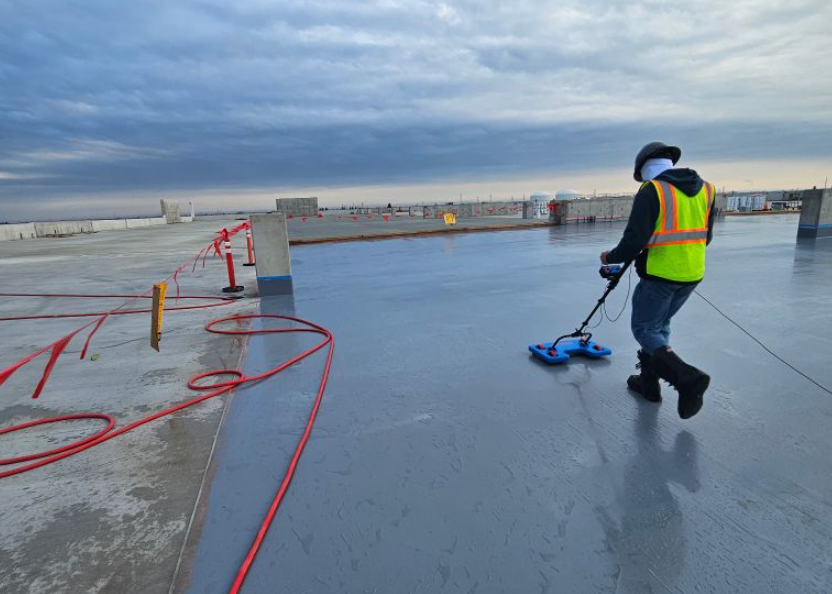
The crew wets the roof lightly, then lays a perimeter wire connected to a low-voltage generator. Water spreads the current across the membrane. At a breach, current drops through to the deck, and a handheld receiver reads the signal's direction and strength. The technician follows it to the exact point of entry, often within an inch. Non-conductive decks need a conductive primer applied at installation.
High-Voltage Testing
This version works on a dry surface. A technician sweeps a charged electrode across the membrane. Where a breach exists, a small, harmless arc jumps to the deck and the unit alarms. It suits exposed single-ply roofs and vertical surfaces such as parapets.
What the Report Contains
Firms working to ASTM protocols, like ELD Solutions, LLC, mark each breach on the roof and document it with GPS coordinates, photographs, and a written summary. The report gives repair crews a target list and owners the paperwork that warranty and insurance reviews require.
Why Bay Area Roofs Need a Closer Look
Marine fog and salt air keep roofs damp for long stretches, and standing moisture finds seams that dry roofs never test.
Concentrated winter rain arrives in bursts. Drains back up, water ponds, and even a small breach admits a surprising volume.
Seismic movement flexes buildings and stresses flashings, curbs, and penetrations.
Rooftop trades are constant. Solar installers, HVAC crews, and telecom technicians walk membranes never built for foot traffic.
Flat and low-slope construction dominates commercial districts from San Jose to Oakland, and flat roofs hide leaks well.
When to Schedule a Scan
Right After a New Membrane Goes Down
Most defects start during installation: a missed weld, a punctured sheet, a misplaced fastener. ASTM D7877 itself notes that uncorrected defects can cause premature membrane failure. A scan before the contractor leaves puts the fix on their schedule, not the owner's.
Before Overburden Covers the Roof
Green roofs, paver systems, and plaza decks bury the membrane under soil, gravel, or concrete. Once that overburden is in place, electronic leak detection can help identify potential membrane breaches before they become costly problems. Testing first costs far less than excavating later.
When Water Appears but the Source Does Not
Recurring stains with no obvious cause are the classic call. Providers such as ELD Solutions, LLC, field these requests from property managers who have already paid for two or three unsuccessful roof visits.
Before a Warranty Expires or a Building Changes Hands
A documented scan near the end of a manufacturer's warranty catches covered defects while the claim window is open.
ELD vs. Flood Testing
Flood testing dams the roof and holds inches of water for 24 to 72 hours. It answers one question: does the roof leak? ELD answers the one that matters: where?
Flood tests add tons of weight; ELD adds none.
Flood tests risk pushing water into the building; ELD does not.
Flood tests depend on dry weather; high-voltage ELD works year-round.
Flood tests finish in days; ELD usually finishes in hours.
Frequently Asked Questions
Does the testing damage the roof?
No. Neither method cuts, drills, or floods. Low-voltage current is comparable to a small battery, and technicians calibrate the high-voltage arc to the membrane thickness.
Can it test a roof that already has solar panels?
Yes. Technicians scan the accessible field and around racking feet, where most solar-related breaches occur. Contractors like ELD Solutions, LLC, flag any zones the panels make unreachable.
How long does a scan take?
Most commercial roofs finish in one day. Small flat roofs and decks take a few hours.
The Bottom Line
Electronic leak detection replaces the trial-and-error roof visit with a precise, documented answer. It works on nearly every membrane type, it leaves the roof untouched, and it fits the Bay Area's wet winters and dense flat-roof construction better than any older method.
Property owners who test right after installation, before overburden, and before warranties lapse spend far less over the life of a roof than those who wait for stains. For a leak with no visible source, a professional roof leak detection scan from a firm such as ELD Solutions, LLC, is the fastest path to a repair that actually holds. Request an inspection before the next storm system arrives.



Comments