


What Are UAV Defense Radars? Guide to UAV & C-UAV Radar Tech
- Jack Ranson
- Feb 26
- 4 min read

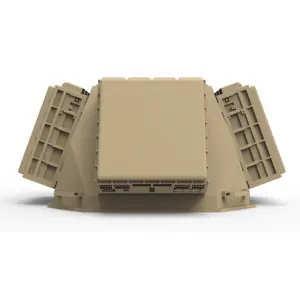
The development of UAV radars and defense radars has changed the way countries, their militaries, and critical infrastructure guard their airspace against threats from unmanned aerial vehicle (UAV) intrusions. Since UAVs (popularly known as drones) have become more affordable and increasingly multifunctional not only in the civilian sector but also in the military, counter-UAV and radar technologies have been rapidly progressing to detect, track, identify, and neutralize hostile drones.
This guide is a comprehensive, reliable, and current UAV defense radar breakdown and its incorporation in modern air defense as of the beginning of 2026.
What Are UAV Defense Radars?
UAV defense radars are specialized for detecting and tracking unmanned aerial vehicles (UAVs), including small drones, swarms, and larger unmanned systems. In contrast to traditional air defense radars, which are primarily manned aircraft or missile-optimized, UAV defense radars are geared for the detection of low-altitude, low-radar cross-section targets that frequently slip past traditional systems. Such radar technologies constitute an essential layer in counter-UAV (C-UAV) defense systems whose goal is to protect the airspace, critical facilities, and military equipment.
Unmanned aerial vehicles (UAVs) are aircraft that do not have a human pilot onboard and can be either remotely controlled or operate autonomously. They are progressively utilized for various purposes such as surveillance, delivery, agriculture, and combat missions.
Why UAV Defense Radars Are Critical
The use of small quadcopters is one of the present dangers for smuggling, reconnaissance, or attack. They may also use swarming tactics to overwhelm traditional defenses. UAV defense radars provide the early warning and situational awareness necessary to identify these threats before they are at sensitive locations. As noted by defense analysts, counter-drone systems must be able to detect, identify, track, and mitigate UAV threats and radar is the basic sensing technology.
How UAV Radars Work
Active Radar Fundamentals
Defense radar sends out radio waves and then detects the reflected waves (echoes) from objects moving in the air. The radar, by examining the return signals, figures out an object's position, speed, and route. This method of radiolocation is the basis of UAV defense radar technology.
To detect small, slow, and low-flying UAVs more effectively, UAV defense radars generally employ Doppler, Frequency-Modulated Continuous Wave (FMCW), and phased-array methods. These methods assist in distinguishing drone signatures from birds and other non-threat objects.
Micro-Doppler Techniques
Micro-Doppler signatures refer to the minute frequency changes induced by a drone's rotor movements. Radars can use these features to differentiate drones from birds or other debris. Therefore, in the case of cluttered environments, this technology significantly improves classification accuracy.
Sensor Fusion and AI Integration
Advances in UAV defense radars have made them more capable of working alongside other sensors, such as radiofrequency (RF) scanners, optical/infrared cameras, and acoustic arrays. Besides, they use artificial intelligence (AI) to combine data, simplify the identification of threats by lowering false detection, etc.
Types of UAV Radars and Defense Radars
Long-Range Perimeter Defense Radars
These radars sweep broad areas and give an early alert to the UAVs coming as threats. They are indispensable to the military bases, airfields, border zones, and critical infrastructures where it is an absolute necessity to detect the enemy before he gets in.
3D and Phased-Array UAV Radars
Today, UAV defense radars with 3D scanning and phased-array antennas can track a multitude of targets at once, providing both elevation and azimuth information with great precision. Such radars facilitate quick tracking as well as help a counter-UAV system in deciding on the response very fast.
Short-Range and Portable Systems
In case the defense requirement is limited to a certain area, like stadiums or therefore temporary sites of events, small portable drones with radar can be used as a flexible solution for the detection of the threat. It is supposed that these systems can be integrated with the handheld detectors and the point-and-shoot systems.
Where UAV Defense Radars Are Deployed
Military & Defense
The defense radars are an indispensable element in battlefield awareness and national security. A counter-UAV system like the U.S. Army's Mobile-Low, Slow, Small Unmanned Aircraft Integrated Defeat System (M-LIDS) combines top-notch radar detection capabilities with the form of electronic warfare and kinetic defenses.
Airports & Critical Infrastructure
Unauthorized UAVs entering the airspace around airports or industrial sites puts the safety of these places at risk. Detecting these drones using radar enables the creation of a protective airspace bubble around such facilities that can track and give warnings in real-time.
Urban and Civil Security
In cities where radar signals are likely to get interference, UAV defense radars combined with optical and RF sensors are among the various surveillance systems used by police and other public safety agencies.
Challenges and Considerations
Despite their effectiveness, UAV defense radars still confront a number of technical and regulatory issues:
Small RCS: Most of the UAVs, which are made of composite materials, reflect very little radar energy and hence, getting them detected through radar is quite difficult.
False Positives: Distinguishing drones from birds or other debris demands highly sophisticated signal processing and AI.
Regulatory Limits: Active counter-UAV operations (such as jamming) are generally prohibited in civilian airspace; therefore, radar is the main layer for detection, which can lead to an action.
Defense systems like those on UAV Defense showcase advanced smart C-UAV radar technology. They blend AI with multi-sensor inputs and offer strong tracking abilities. This combination ensures thorough airspace security. These products demonstrate that UAV radars and defense radars play a primary role in the contemporary counter-drone setting.
Key Takeaway
UAV defense radars are a must-have in today's world full of drone threats, where these devices are everywhere and quite unexpected most of the time. The application of such defense radar systems extends from military battlefields to urban airspace; thus, they offer the crucial first detection and tracking capabilities required for an effective UAV defense.
Ultimately, the global drone detection market is growing at a breakneck speed, and technologies, including AI and multi-sensor fusion, are advancing.


Comments